
Why Remembering the Beyem Seyo Pack Matters for the Future of Wolf Conservation
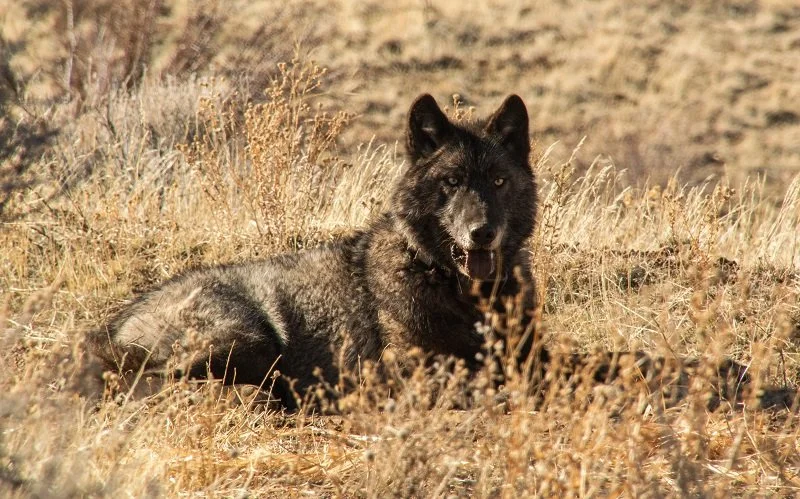
How California Lost the Beyem Seyo Wolf Pack and How to Prevent It from Happening Again
In October 2025, the California Department of Fish and Wildlife (CDFW) quietly carried out an operation that killed four wolves from the Beyem Seyo pack. At least one pup was killed unintentionally, and surviving dependent pups were never found. CDFW eventually stopped searching for them.
This loss represents one of the most significant setbacks to wolf recovery since wolves naturally returned to California over a decade ago. For a state that prides itself on wildlife conservation leadership, what happened demands a hard look.
Photo: California Department of Fish and Wildlife
When Industry Pressure Overrides Science
CDFW carried out the operation, but context matters. Across the western United States, ranching industry pressure has consistently influenced predator policy, often overriding both scientific recommendations and public interest (Treves & Naughton-Treves, 2005). This pattern repeats: livestock losses occur, industry demands action, and agencies respond with lethal control, even when science points to more effective alternatives.
California illustrates this systemic failure: prioritizing short-term private economic interests over long-term ecological stewardship, despite strong public support for wolf conservation. Wolves returned to California naturally through long-distance dispersal, an ecological process that's been happening for millennia and is essential for genetic diversity and population resilience (Mech & Boitani, 2003). Managing them as threats to be eliminated contradicts both their protected status and the science of coexistence.
The Policy Shift That Led To Tragedy
In the early 2020s, California established a three-tier program to address rancher conflict. Tier 1 and Tier 3 provided compensation for losses. Tier 2 funded proactive, non-lethal deterrents like fladry, range riders, guard animals, and carcass removal. Research consistently shows that these preventative measures are more effective than compensation alone.
Then in 2024, California eliminated Tier 2 funding while continuing to pay for losses. This policy shift removed incentives for prevention and placed the entire burden on after-the-fact reimbursement. The result was predictable. Studies show that compensation-only models don't reduce conflict - they may actually increase it by failing to change livestock management practices (Santiago-Ávila et al., 2018).
The Beyem Seyo loss didn't happen because coexistence is impossible. It happened because prevention was defunded.
Collaring Wolves: Research Tool or Lethal Shortcut?
In 2025, CDFW collared 12 wolves statewide, including five from the Beyem Seyo pack. Capture and handling are stressful for wolves and can disrupt pack dynamics. Non-invasive methods such as camera traps and track surveys have been shown to provide population-level data with comparable accuracy and substantially lower risk (Ausband et al., 2010).
Public concern persists about whether increased collaring makes targeted lethal control easier. Transparency around objectives remains limited, yet CDFW plans to collar more wolves in 2026.
Preventing the Next Tragedy
Public outrage followed this loss, but outrage alone isn't enough. Historically, attention fades, pressure resumes, and the cycle repeats.
Women for Wolves believes this loss must mark a turning point. California has the tools, the science, and the public support to lead on non-lethal coexistence, but only if prevention is treated as essential, not optional.
We're committed to working with agencies, landowners, Tribal partners, and communities to reduce conflict before it escalates. Remembering the Beyem Seyo pack means ensuring that science backed prevention, not rancher pressure, guides wolf policy moving forward.
About Women for Wolves:
Women for Wolves is a California-based nonprofit working to promote science-based, collaborative, and compassionate wildlife conservation. The organization works at the intersection of research, policy, education, and community collaboration to protect wolves and reduce human–wildlife conflict through coexistence and public education.
Based in El Dorado County, California, Women for Wolves also operates a wolf-dog rescue and sanctuary, providing firsthand insight into behavior, ethics, and coexistence. The organization partners with scientists, Tribal leaders, landowners, and agencies to support solutions that keep both communities and wildlife safe.
Media & Program Inquiries: