
1000+ hours of research in 2025
research & analysis
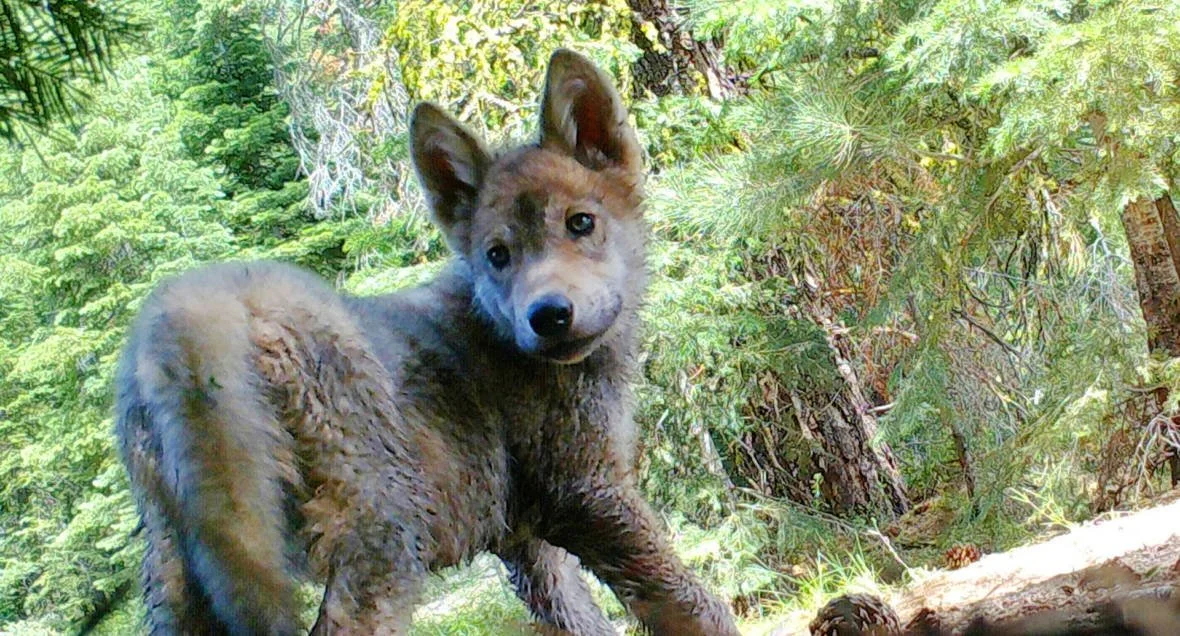
At Women for Wolves, research is the foundation of everything we do. Wolves and wolf-dogs exist at the crossroads of ecology, community, and culture, and understanding that complexity is essential to protecting them.
Our research directly informs every program and advocacy effort—from humane legislation to veterinary care for rescues, and community education. This includes real-time policy work, such as preparing research-based testimony for the California State Assembly in support of the California Coexistence Program, as well as ecological & sociological studies through Unity Environmental University.
Our learning is continuous. We integrate biodiversity, Indigenous science, behavioral ecology, cultural history, and anthropology to chart paths towards coexistence and the the human–wildlife connection. Research is how we protect wolves—and how we help communities thrive alongside them.
Recent Wolf Findings & Research Highlights
1. California Wolf Population Updates (2024–2025)
California now hosts approximately 50–70 wolves, including packs such as Lassen, Whaleback, Beyem Seyo, Logan, Shasta descendants, and the newly recognized Grizzly Pack. Dispersal patterns show continued recolonization from Oregon, with wolves returning to ancestral territories for the first time in 100 years.
Key Finding: Connectivity corridors between the Klamath Basin, Modoc Plateau, and northern Sierra remain critical for sustaining natural recolonization.
2. Non-Lethal Deterrents Outperform Lethal Control
A 2023–2024 meta-analysis found that lethal removal increases depredation rates the following year, while non-lethal deterrents — especially guardian dogs, fladry, auditory deterrents, human presence, and carcass management — reduce conflict by up to 80% when used in combination.
This research directly informs our Rancher Coexistence Program launching in 2026.
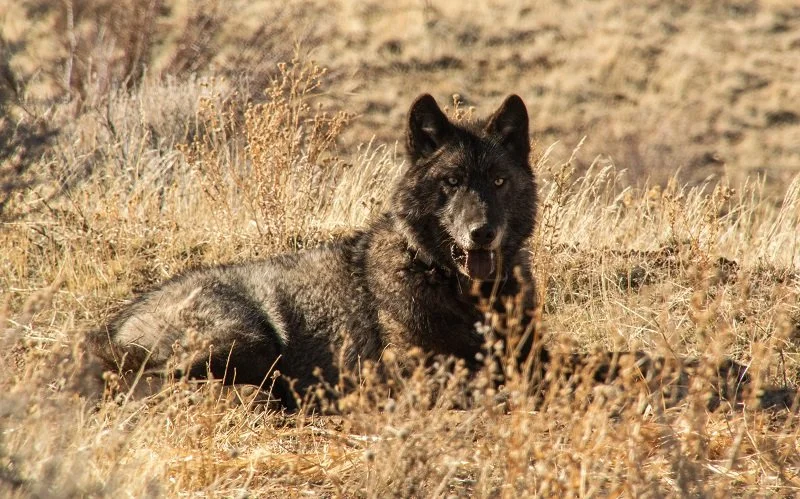
Photo: Axel Hunnicutt
3. Wolves Improve Biodiversity & Climate Resilience
New ecosystem models show that wolves stabilize ungulate browsing, allowing riparian vegetation to recover and increasing carbon sequestration in riverside plant communities. This adds to the growing evidence that apex predators are climate-relevant species.
4. Cultural Research on Wolves & Community Healing
Recent sociological work links wolf recovery to community wellbeing, youth empowerment, and emotional resilience — especially among Indigenous communities who have cultural relationships with Wolf Nation. This research supports our work with the Oglala Lakota BEAR Project, the Shingle Springs Rancheria, and California Tribal partners.
5. Emerging Findings from Women for Wolves (2025)
Our own internal research has documented:
• the importance of biodiversity levels increasing as a result of wolf presence
patterns in wolf pack behavior as a result of non-lethal deterrents
management methods that are effective in a harmonious relationship between wolves and people
the effectiveness of certain vocalization-based deterrents,
• behavioral parallels between rescued wolf-dogs and wild wolves,
• the emotional and healing impact of wolf-dog interactions on youth participants,
• the potential role of storytelling and media in shifting public attitudes.
These findings continue to shape sanctuary care, coexistence programming, and public education.
Coming in 2026: WFW Research Library & Database
We are building a publicly accessible library of:
• peer-reviewed wolf studies,
• WFW coexistence findings,
• Indigenous knowledge frameworks,
• rancher-supported deterrent research,
• wolf-pack mapping and ecological modeling.
This will become the first California-focused, women-led, TEK-guided wolf research hub in the United States.
Indigenous Science as a Primary Pathway for Wolf Conservation &
Modern Wildlife Management
Written By Anjali Ranadive
Abstract.
Durable large-carnivore recovery in human-dominated landscapes requires management that is scientifically rigorous and socially legitimate. An emerging body of research shows that lands governed or co-managed by Indigenous Peoples sustain high biodiversity and ecological integrity, and that weaving Indigenous Knowledge (IK) with Western science improves conservation outcomes. For wolves (Canis lupus), where biological feasibility often collides with social conflict, Indigenous-led or co-produced approaches provide tools to shift from control-oriented management to coexistence. We synthesize peer-reviewed evidence on (1) biodiversity and habitat integrity on Indigenous lands, (2) the limits of exclusively top-down, lethal-control frameworks for carnivores, and (3) cases where knowledge co-production has improved large-carnivore governance. We outline implications for wolf policy: prevention-first coexistence, co-management institutions that embed IK, and transparent evaluation of interventions.
Introduction
Wolf conservation in North America frequently hinges less on biological limits than on governance—how evidence is generated, whose values count, and how decisions are made. Studies across continents demonstrate that Indigenous-managed lands overlap a substantial share of Earth’s remaining high-integrity ecosystems and support biodiversity on par with or exceeding state protected areas (Garnett et al. 2018; Schuster et al. 2019). Concurrently, critiques of conventional North American wildlife management highlight inconsistent application of scientific hallmarks and limited incorporation of local/Indigenous knowledge (Artelle et al. 2018; Mawdsley 2018). For contentious carnivores, community-ecology-informed coexistence strategies and evidence-based evaluation of interventions are essential (Chapron and López-Bao 2016; Treves et al. 2016).
Indigenous stewardship and biodiversity outcomes
Global syntheses show that ~25–28% of terrestrial lands are owned, managed, or used by Indigenous Peoples and that ~40% of protected areas and intact habitats intersect these territories (Garnett et al. 2018). Across Australia, Brazil, and Canada, vertebrate richness and threatened species representation on Indigenous lands are comparable to or greater than in protected areas (Schuster et al. 2019). Recent work further links high-integrity forests to overlaps between protected and Indigenous governance (Sze et al. 2022), reinforcing that Indigenous stewardship is a conservation asset, not merely a social consideration.
Limits of lethal-control frameworks for large carnivores
For wolves, lethal interventions are often justified as conflict prevention despite weak or mixed evidence at population scales. A standards-of-evidence review concluded that many predator-control programs lack robust experimental tests and recommended suspending lethal methods without demonstrated functional effectiveness (Treves et al. 2016). Subsequent analysis in Michigan found lethal intervention could reduce recurrence at a treated site while increasing risk to nearby neighbors, producing no net benefit at broader scales (Santiago-Ávila et al. 2018). Community-ecology framings instead emphasize designing human–carnivore “shared landscapes” with prevention-first tools and institutions (Chapron and López-Bao 2016).
Weaving knowledge systems improves management
Across taxa and regions, co-production that braids IK with Western science strengthens monitoring, risk assessment, and legitimacy of decisions (Henri et al. 2021; Priadka et al. 2024). In carnivore systems, participatory and co-management models—well developed in Arctic polar bear governance—demonstrate how Indigenous leadership, community-based monitoring, and reciprocal learning can align human safety, ecological goals, and cultural continuity (Miller et al. 2025; Government of Canada 2025). Within the wildlife profession, calls are growing to evolve governance cultures by formally integrating Indigenous practices and authority (Fisk et al. 2024).
Implications for wolf conservation
Center Indigenous governance and IK. Formal co-management with Tribal governments, recognition of Tribal sovereignty, and resourcing of community-led monitoring can improve spatial risk mapping, denning protections, and seasonal husbandry guidance in wolf country (Garnett et al. 2018; Fisk et al. 2024).
Adopt prevention-first coexistence. Emphasize range-riding, carcass sanitation, reproductive-season buffers, fladry/turbo-fladry, and guardian animals; evaluate with transparent, experimental designs (Treves et al. 2016; Chapron and López-Bao 2016).
Use evidence standards for interventions. Before scaling lethal controls, require population-level tests demonstrating net conflict reduction without spillover harms (Santiago-Ávila et al. 2018).
Communicate plural benefits. Where wolves trigger trophic and behavioral cascades, acknowledge both positive ecosystem effects and scientific debate to avoid over-claiming, maintaining credibility (Ripple and Beschta 2012; Mech 2012).
Build institutions for shared stewardship. Durable wolf recovery depends on institutions that convene Indigenous nations, producers, agencies, and civil society as co-decision makers, not just consulted stakeholders (Artelle et al. 2018; Fisk et al. 2024).
Conclusions
The weight of evidence indicates that Indigenous stewardship sustains biodiversity and ecological integrity at scale, and that co-producing knowledge with Indigenous Peoples improves conservation practice. For wolves, where social legitimacy often limits what biology allows, Indigenous-led or co-managed approaches paired with rigorous evaluation of conflict-prevention tools offer the most promising path to long-term coexistence.
-
Literature Cited (JWM style)
Artelle, K. A., J. D. Reynolds, D. E. M. Brown, J. A. M. E. Housty, and N. Dulvy. 2018. Hallmarks of science missing from North American wildlife management. Science Advances 4:eaat6283. Science
Chapron, G., and J. V. López-Bao. 2016. Coexistence with large carnivores informed by community ecology. Trends in Ecology & Evolution 31:578–580. PubMed+2Regulations.gov+2
Fisk, J. J., J. D. Roth, C. T. Darimont, K. A. Artelle, and C. T. Bergstrom. 2024. Evolving wildlife management cultures of governance through Indigenous practices. Journal of Wildlife Management 88:e22584. Wildlife
Garnett, S. T., N. D. Burgess, J. E. Fa, Á. Fernández-Llamazares, Z. Molnár, et al. 2018. A spatial overview of the global importance of Indigenous lands for conservation. Nature Sustainability 1:369–374. CIFOR-ICRAF
Henri, D. A., A. M. Boudreau, P. B. LeBlanc, and M. Lauriault. 2021. Weaving Indigenous knowledge systems and Western sciences in terrestrial research: a systematic map protocol. Environmental Evidence 10:31. Fecpl
Mawdsley, J. R. 2018. Artelle et al. (2018) miss the science underlying North American wildlife management. Science Advances 4:eaat8281. PMC
Mech, L. D. 2012. Is science in danger of sanctifying the wolf? Biological Conservation 150:143–149. Wolf Center
Miller, K. M., M. P. Heide-Jørgensen, and J. A. York. 2025. Coexistence between people and polar bears supports community well-being and conservation. Communications Earth & Environment 6:12017. Nature
Priadka, P., J. E. E. Hofmeester, B. van Moorter, A. Ordiz, and J. D. C. Linnell. 2024. Weaving Indigenous and Western knowledge systems to understand moose ecology. People and Nature 6:1123–1137. BES Journals
Ripple, W. J., and R. L. Beschta. 2012. Trophic cascades in Yellowstone: the first 15 years after wolf reintroduction. Biological Conservation 145:205–213. ScienceDirect+1
Santiago-Ávila, F. J., A. M. Cornman, and A. Treves. 2018. Killing wolves to prevent predation on livestock may protect one farm but harm neighbors. PLOS ONE 13:e0189729. PLOS+1
Schuster, R., R. R. Germain, J. R. Bennett, N. J. Reo, and P. Arcese. 2019. Vertebrate biodiversity on Indigenous-managed lands equals that in protected areas. Environmental Science & Policy 101:1–6. ResearchGate
Sze, J. S., S. P. Koh, J. L. Giam, and L. P. Koh. 2022. Indigenous lands in protected areas have high forest integrity. Current Biology 32:5003–5009. Cell
Treves, A., K. A. Artelle, and C. T. Darimont. 2016. Predators and the public trust. Frontiers in Ecology and the Environment 14:353–359. (See also Treves et al. 2016 “Predator control should not be a shot in the dark”.) wrrb.ca
• Literature Reviews
We regularly study peer-reviewed research on wolf ecology, predator–prey dynamics, non-lethal deterrents, TEK-based stewardship, and human–wildlife conflict. These reviews help us translate complex science into clear guidance for the public.
• Trend & Pattern Analysis
We identify emerging patterns in wolf movement, depredation risk, public attitudes, and sanctuary behavioral data. Recognizing trends allows us to anticipate conflict, support ranchers, and strengthen statewide coexistence strategies.
• Data Collection & Interpretation
We analyze both quantitative data (depredation rates, deterrent success, pack distribution, seasonal behavior) and qualitative data (rancher interviews, Tribal teachings, youth feedback). This gives us a holistic understanding of wolf conservation.
Ecological & Behavioral Monitoring
We study wolf-dog behavior at the sanctuary, monitor pack dynamics, observe feeding ecology, track movement patterns, and analyze behavioral responses to enrichment, sound cues, and human presence. These insights inform both captive-care welfare and wild wolf advocacy.
HOW WE DO OUR RESEARCH:
Our approach blends multiple knowledge systems and disciplines. Women for Wolves produces scientific and literary research grounded in ecological data, sociological insight, and Indigenous knowledge. Our work includes:
• Human Dimensions & Sociological Research
We examine human attitudes toward wolves, community perceptions, and social drivers of conflict. Our coexistence programs are designed using evidence-based frameworks from human–wildlife conflict science, psychology, anthropology, cultural history, folklore implications across regions, and environmental sociology.
• Indigenous Knowledge & Land-Based Science
We work with local Tribal partners and elders to integrate Traditional Ecological Knowledge (TEK), place-based stewardship, and cultural teachings about Wolf Nation. These teachings guide our non-lethal deterrent programs, habitat restoration, and policy positions.
• Policy & Legal Analysis
We closely track state and federal wolf legislation, lethal removal trends, ESA protections, and court rulings. Our research ensures our policy recommendations are scientifically grounded and culturally informed.
• Field Partnerships & Community Science
Through collaborations with ranchers, biologists, and educators, we gather real-time data on depredation risk, deterrent success rates, wildlife movement, and seasonal patterns.