
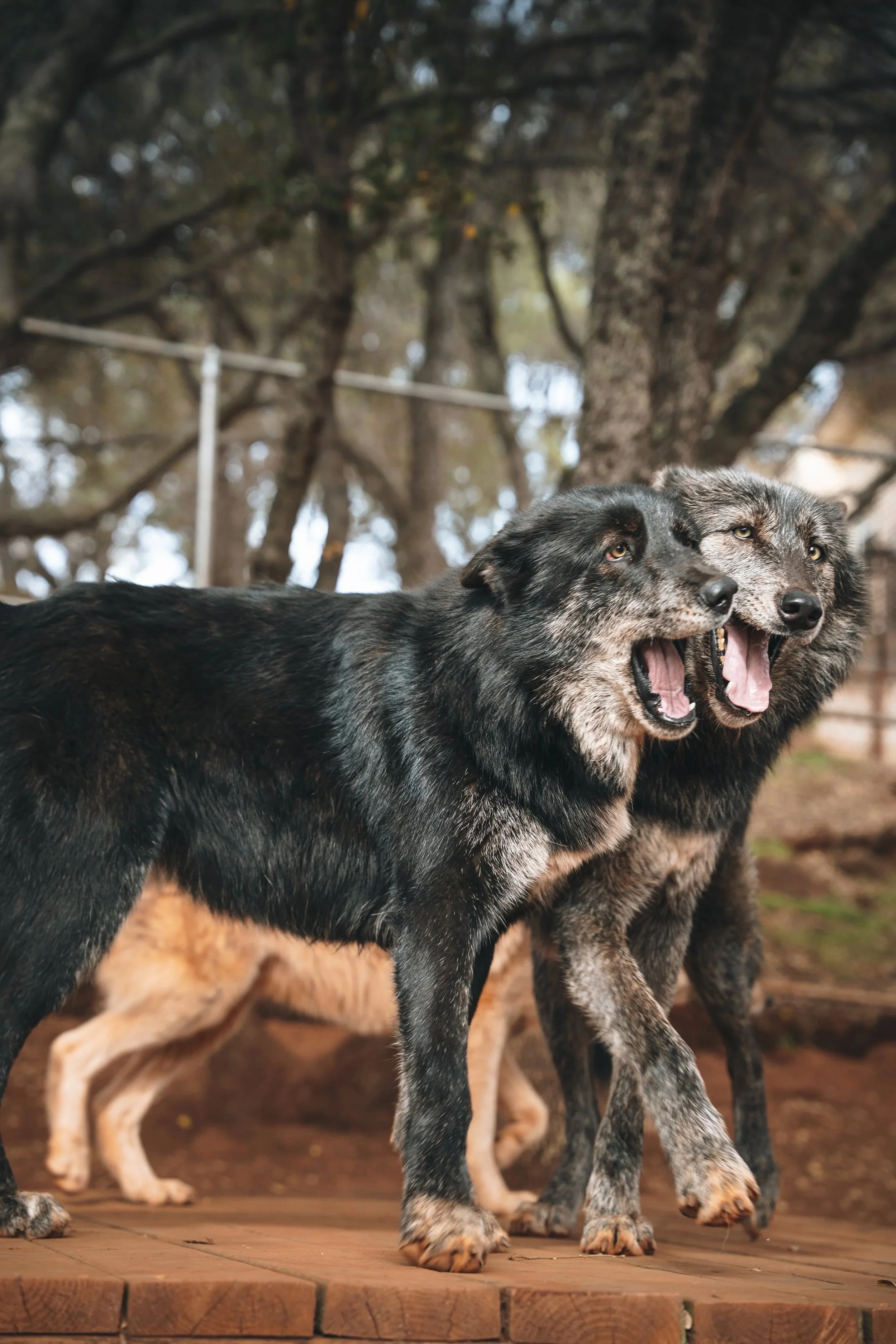
300 wolf-dogs & animals rescued, and counting!
Note: We are currently not taking any surrenders.we rescue, rehabilitate, & rehome wolf-dogs/northern breed dogs. Through trusted partnerships & expert-led efforts, we’ve helped save hundreds from neglect, abandonment, or abuse. Our work includes:
Emergency pull-outs from shelters facing euthanasia
Owner surrenders handled with dignity and education
Long-term rehabilitation for behavioral or medical needs
Responsible placement in educated, legal, and prepared homes
Wolf-Dog Ownership: Requirements & Things to Consider
Owning a wolf-dog is a serious, lifelong commitment. Wolf-dogs are not traditional pets and require specialized care, legal compliance, and experience with wolf-dogs or large/northern breed dogs. Before considering ownership, please review the following requirements carefully.
Ethical ownership means planning for the animal’s entire life—even if circumstances change
Legal Requirements
Wolf-dog ownership laws vary widely by state, county, and city. DO YOUR RESEARCH for your county/state to make sure you are in legal compliance
Some areas prohibit ownership entirely or restrict by content percentage
Zoning, permitting, and insurance requirements may apply
Owners are fully responsible for knowing and complying with all local laws
Experience & Handling
Prior experience with wolf-dogs or northern breeds is strongly recommended (consider volunteering at a sanctuary or with a northern breed rescue to get experience)
Wolf-dogs are intelligent, independent, and not the same as domestic dogs when it comes to obedience
They are not ideal for first-time dog owners
Traditional training methods often do not work and may cause stress or behavioral issues
Containment & Housing
Secure, escape-proof containment is essential
Standard fencing is usually insufficient (ideally 8-12 ft fencing, plus 3-4 ft dig proof wiring, and 9-11 gauge wire)
Many wolf-dogs require dig guards, lean-ins, double gates, or specialized enclosures
Indoor access alone is not adequate containment
Time & Lifestyle Commitment
Wolf-dogs require significant daily interaction, enrichment, and supervision
They do not adapt well to frequent travel or long periods alone
Wolf-dogs often thrive with a companion dog/wolf-dog
Many struggle in typical suburban or apartment environments, but that is not the case with all
Ownership is a long-term commitment that can be up to 15 years
Financial Responsibility
Specialized veterinary care may be limited or more expensive
Emergency care can be difficult to access
High-quality diet, enrichment, containment, and medical costs add up quickly (raw diet mixture or fully raw)
Insurance coverage may be required or difficult to obtain
Socialization & Behavior
Wolf-dogs may be wary of strangers and unfamiliar environments
They often have strong prey drive and may not be safe around small animals
Public outings can be stressful and are not always appropriate
Behavioral challenges are common without proper environment and support
Ethical Considerations
Wolf-dogs are frequently surrendered due to misunderstanding or unrealistic expectations
Rehoming options are extremely limited
Rescue placement can be difficult and time-consuming
Ethical ownership means planning for the animal’s entire life—even if circumstances change
Still Not Sure?
If you’re unsure whether you can meet these requirements but want to explore options responsibly, email us. We’re happy to talk through your situation and help you make an informed decision—before an animal’s welfare is at risk.